


The Difference Between Viral and Bacterial Infection
Feeling sick can be confusing and stressful for anyone. You wake up with a sore throat or a fever. You wonder if you need to rush to the doctor. You might ask if you need antibiotics to get better quickly.
Understanding the illness is the first step to recovery. Most illnesses fall into two categories. These are viral illnesses and bacterial infections. They often share similar symptoms. This makes them hard to tell apart without medical help.
What Are Bacteria and Viruses?
It helps to understand what causes these infections. Bacteria and viruses are different types of germs. They interact with your body in unique ways.
Understanding Bacteria
Bacteria are tiny living things. They are single celled organisms. They exist almost everywhere on Earth. You can find them in soil and water. They even live on surfaces in your home.
However, less than one percent of bacteria cause disease. These are known as pathogenic bacteria. When they grow out of control, you get sick. This is called a bacterial infection.
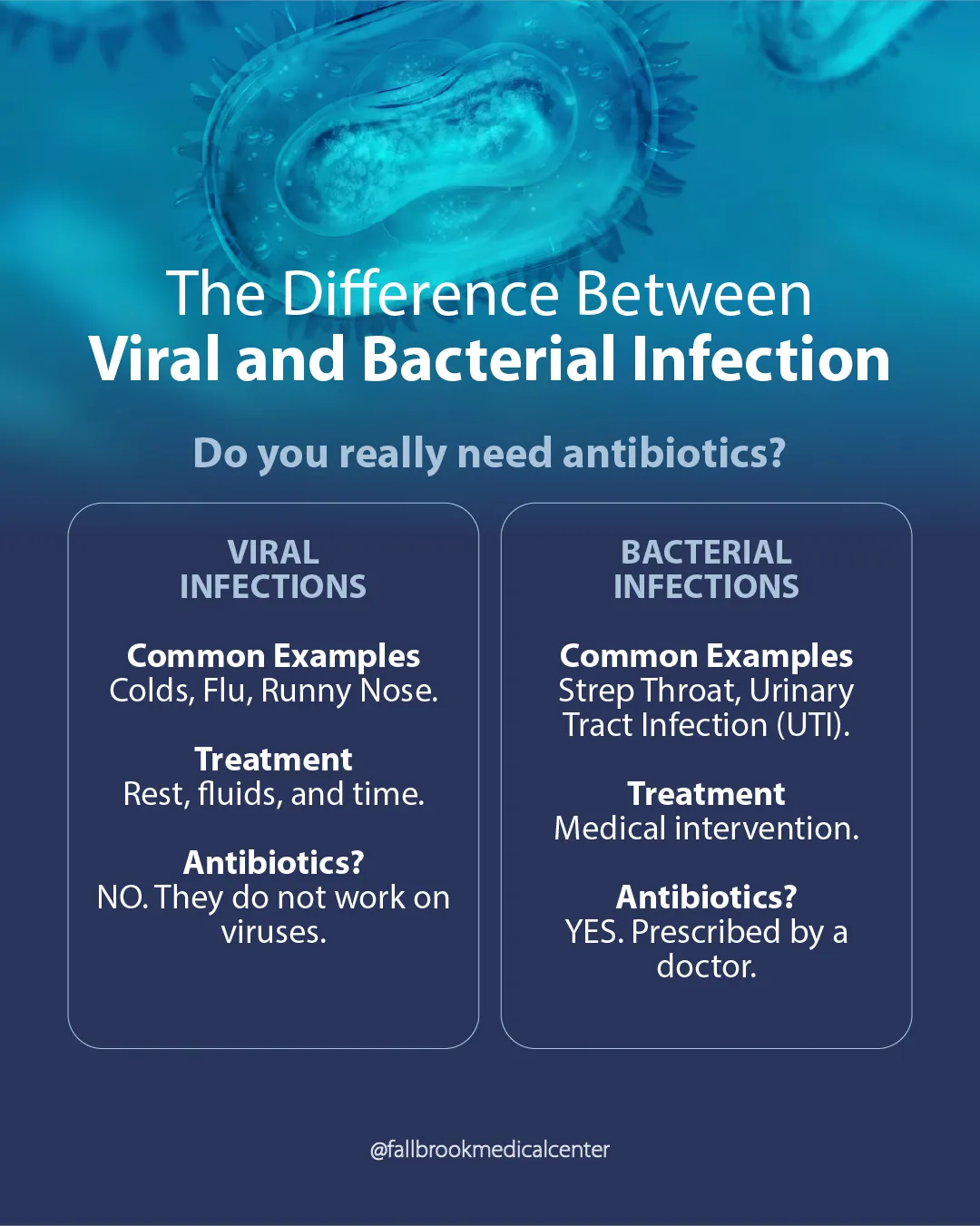
Common bacterial infections include strep throat. They also include urinary tract infection cases. These require specific treatments to stop the bacteria from multiplying.
Understanding Viruses
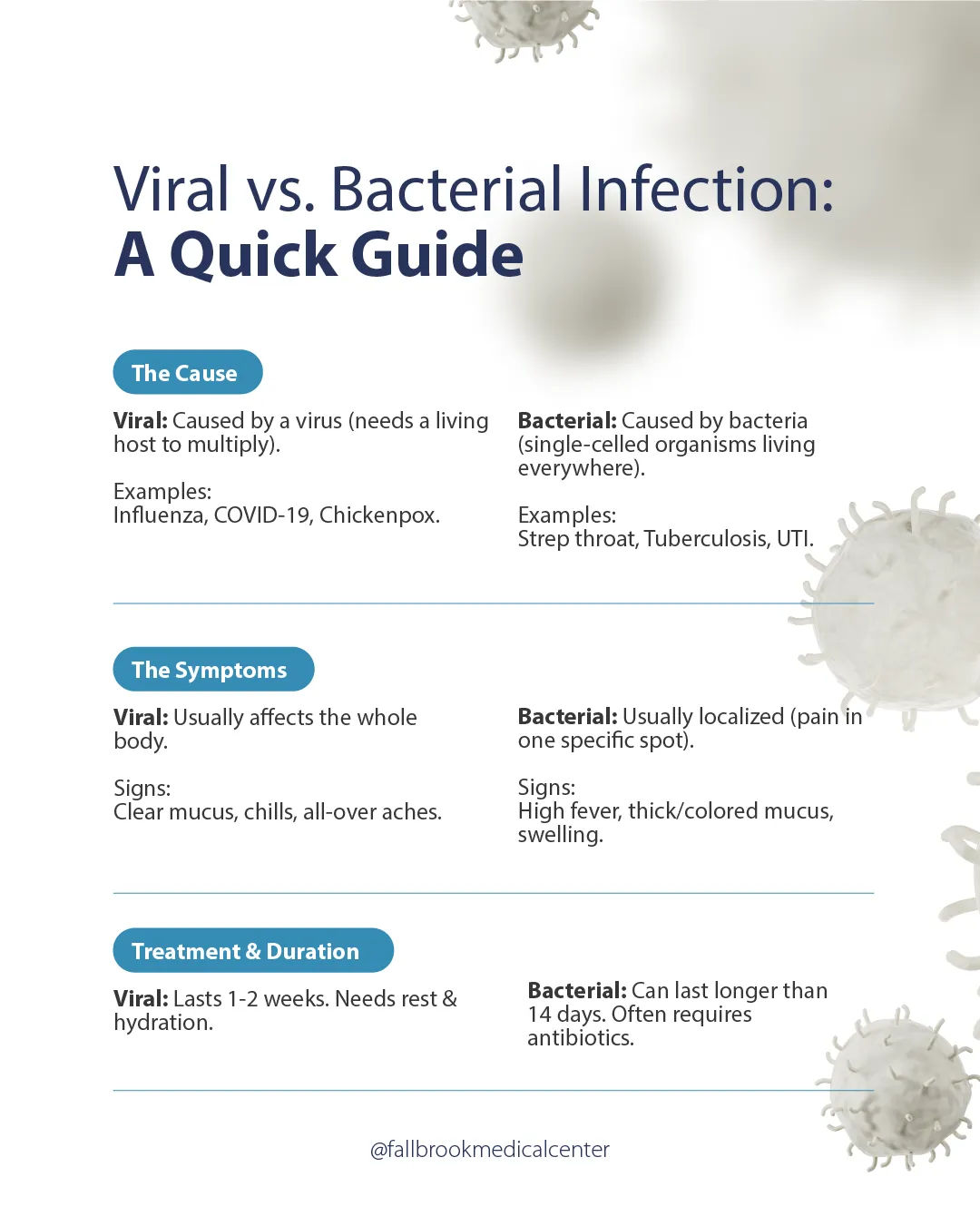
Viruses are much smaller than bacteria. They are not complete cells. They are just genetic material packaged inside a protein shell. They cannot survive on their own.
A virus needs a living host to multiply. It enters your body and invades healthy cells. It then uses those cells to make more virus parts. This process can damage or kill your cells.
Common viral infections are very frequent. They include the common cold and the flu. They also include chickenpox and COVID-19.
Comparing Symptoms of Infections
The symptoms of these infections often overlap. This is why patients get confused. Your immune system reacts to both germs in similar ways.
Shared Symptoms
Both types of infection trigger your body’s defenses. This leads to common signs of illness. You might experience the following issues:
- Fever and chills.
- Fatigue and body aches.
- Headache.
- Coughing and sneezing.
- Sore throat.
These similar symptoms make self-diagnosis difficult. A runny nose cough combo could be viral or bacterial. It often takes a professional to know for sure.
Signs It Is Likely Viral
Viral illnesses often affect the whole body. They tend to involve several symptoms at once. You might have a runny nose, cough, and body aches together.
Most common colds are viral. The mucus is typically clear or watery. A viral fever may improve after a few days. Most viral infections last about a week or two.
Signs It Is Likely Bacterial
Bacterial infections tend to be more localized. This means they affect one specific part of the body. For example, an ear infection causes pain in the ear.
Bacterial mucus is often thick. It may be green, yellow, or bloody. These infections often last longer than 10 days. If you get better and then suddenly get worse, it might be bacterial.
Common Types of Infections
It helps to look at specific examples. This shows how different the two types really are.
Bacterial Infections Include
We see many types of bacterial issues. Strep throat is a classic example. It causes sudden and severe throat pain. Tuberculosis is another serious bacterial condition.
Urinary tract infections are also caused by bacteria. They cause pain and frequent urination. Bacterial pneumonia is a serious lung infection.
Common Viral Illnesses
You likely face viral issues every year. The common cold is the most frequent one. Influenza, or the flu, is another major virus.
Viral gastroenteritis affects the stomach. It is often called the “stomach flu.” Chickenpox and measles are also viral diseases.
Conditions That Can Be Both
Some illnesses can be caused by either germ. This adds to the confusion.
- Pneumonia: This can be viral or bacterial.
- Meningitis: This serious swelling can be caused by both.
- Ear infections: These are often bacterial but can be viral.
- Sinus infections: These usually start as viral but can become bacterial.
How Are They Treated?
The treatment plan depends entirely on the cause. This is the most important difference. Using the wrong treatment can be dangerous.
Treating Bacterial Infections
Doctors treat bacterial infections with antibiotics. These drugs kill bacteria. They can also stop them from reproducing.
Antibiotics work fast for things like strep throat. You often feel better within 24 to 48 hours. However, you must finish the full course.
Stopping early is a bad idea. It can leave some bacteria alive. These survivors can become strong. This leads to antibiotic resistant bacteria. These “superbugs” are very hard to kill later.
Treating Viral Infections
Antibiotics do not kill viruses. Taking them for a cold is useless. It does not help you get better. It puts you at risk for side effects.
In some cases, doctors prescribe antiviral medication. This is common for the flu or shingles. These drugs slow down the virus. They work best when taken early.
Preventing Illness
Prevention is better than cure. You can prevent infections with simple habits. These steps protect you from both bacteria and viruses.
Hygiene Habits
Wash your hands frequently. Use soap and warm water. Scrub for at least 20 seconds. This removes germs from your skin.
Vaccines
Vaccines are powerful tools. They train your immune system. They prepare your body to fight specific germs.
When to Seek Medical Attention
You can handle a mild cold at home. However, some symptoms need professional care. You should watch for warning signs.
Seek help if you have:
- Difficulty breathing or shortness of breath.
- A fever higher than 101°F that lasts more than three days.
- Severe headache or stiff neck.
- Rash or swelling.
- Symptoms that last longer than two weeks.
A doctor can perform tests. A throat swab can confirm strep. A urine test can find a urinary tract infection. These tests guide the right treatment.
Conclusion
Knowing the difference between viral and bacterial infection matters. It helps you make smart health choices. It prevents the misuse of antibiotics.
Viral illnesses often pass with time and rest. Bacterial infection cases often need medicine. Both require you to listen to your body.
If you are unsure, do not guess. Visit a professional at Fallbrook Medical Center. We can diagnose the problem accurately. We will get you on the right path to health.
References
- Mayo Clinic. (2024). Bacterial vs. viral infections: How do they differ?
- Cleveland Clinic. (2023). Bacterial Infection: Causes, Symptoms, Treatment & Prevention.
- WebMD. (2024). Bacterial vs. Viral Infections: The Differences Explained.
- Duke Health. (2024). Is it a Bacterial Infection or Virus?