


Food Poisoning vs Stomach Flu: What You Need to Know
Nausea and stomach cramps can ruin your day instantly. You feel awful and wonder what caused this sudden illness. Is it something you ate for lunch? Or did you catch a virus from a coworker?
Knowing the difference between food poisoning vs stomach flu is vital for your recovery. These two conditions share many common symptoms. However, they have different causes and require different care strategies.
This guide will help you identify which illness you have. We will explore the symptoms, causes, and best treatments. You will also learn how to prevent these uncomfortable stomach issues.
Understanding the Stomach Flu
The term “stomach flu” is actually a nickname. It is not related to the influenza virus that causes the seasonal flu. The medical term for this condition is viral gastroenteritis.
This infection attacks your intestines and causes inflammation. It is highly contagious and spreads easily between people. You can catch it by sharing utensils or touching contaminated surfaces.
Common Causes of Stomach Flu
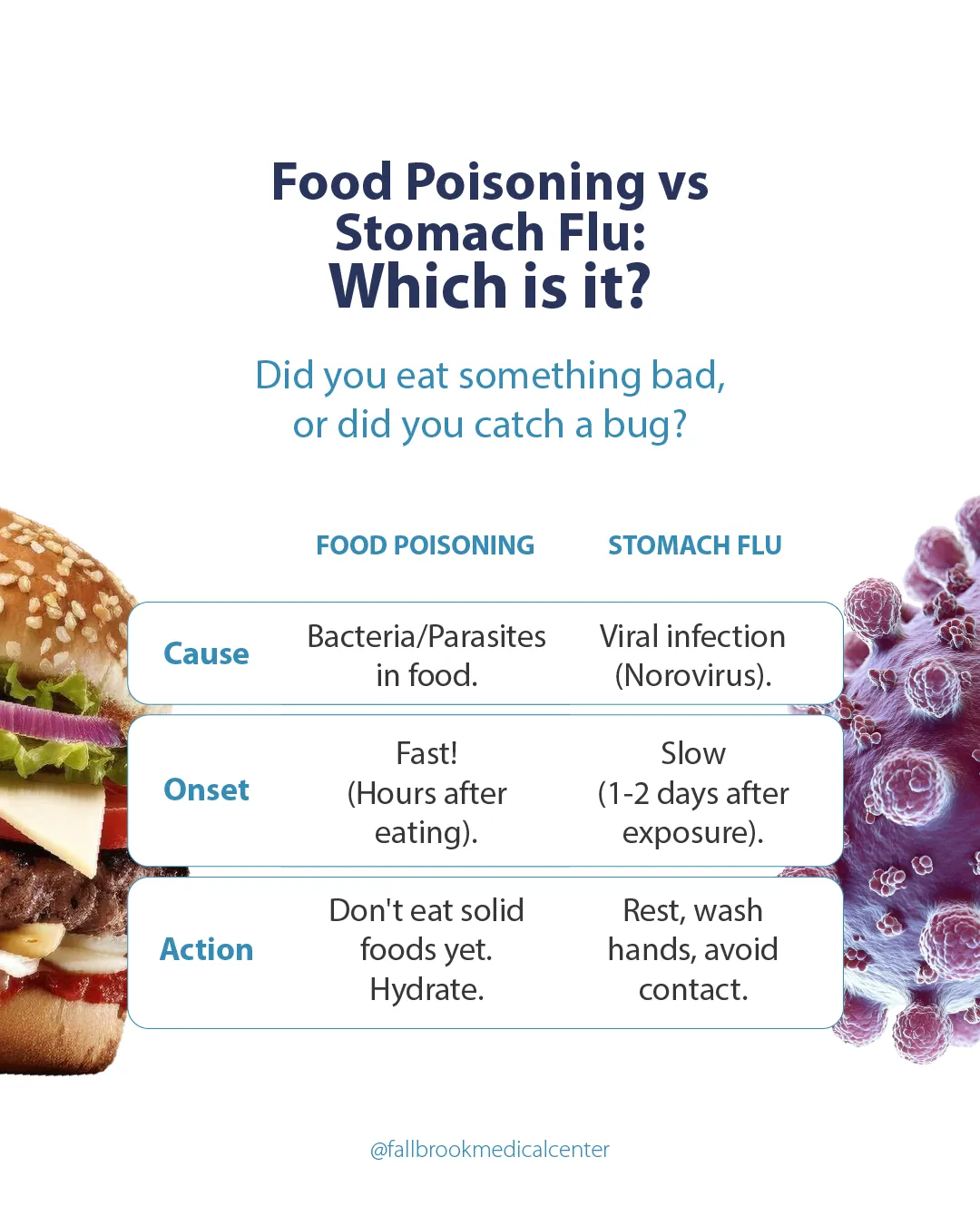
The stomach bug is caused by viruses, not bacteria. The most common culprit is norovirus. This virus spreads rapidly in schools and offices.
Another common cause is rotavirus, which affects many children. These viruses enter your body and multiply. This process leads to the unpleasant symptoms you experience.
Symptoms of Viral Gastroenteritis
Stomach flu symptoms often appear gradually. You might feel “off” for a day before the real illness hits.
- Watery diarrhea is a hallmark sign.
- You may experience nausea and vomiting.
- Abdominal pain and cramping are very common.
- A low-grade fever might develop.
- Muscle aches and headaches often occur.
The illness usually needs to run its course. This means your immune system must fight off the virus. Antibiotics do not work against viral infections.
Understanding Food Poisoning
Food poisoning happens when you eat contaminated food. Germs, bacteria, or parasites hide in what you eat. This can happen at restaurants or even in your own kitchen.
Symptoms of food poisoning typically start very quickly. You might feel sick within hours of eating a meal. This rapid onset is a key difference from the stomach bug.
Common Causes of Food Poisoning
Bacteria are the main cause of this illness. Common offenders include Salmonella and E. coli. Staphylococcus aureus is another frequent cause.
These germs grow on food that is not stored correctly. Undercooked meat is a major risk factor. Unwashed vegetables can also carry harmful bacteria.
Food Poisoning Symptoms Include
Food poisoning symptoms include severe reactions from your digestive system. Your body tries to expel the toxins immediately.
- Vomiting can be violent and sudden.
- Diarrhea is often explosive and urgent.
- Stomach cramps can be very sharp and painful.
- You might experience chills and sweating.
- Weakness occurs due to dehydration.
The severity often depends on the type of bacteria involved. Some cases are mild and pass quickly. Others can be dangerous and require medical help.
Key Differences: Food Poisoning vs Stomach Flu
Telling these two apart can be tricky. They both cause vomit and diarrhea. However, there are clues to look for.
Onset time
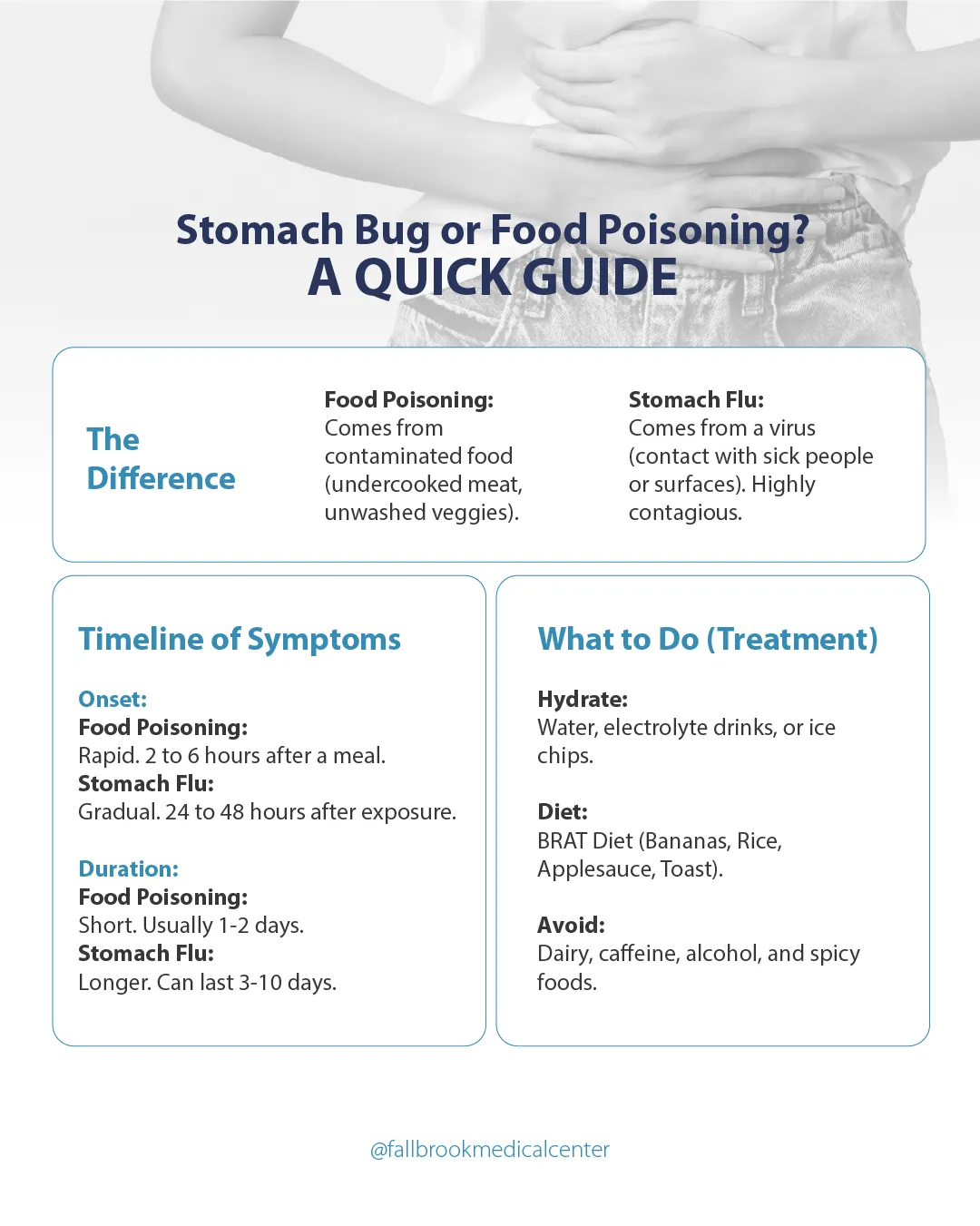
Food poisoning hits fast. You might eat lunch and feel sick by dinner. The stomach flu takes time to incubate. You might be exposed on Monday but not feel sick until Wednesday.
Duration of Illness
Food poisoning typically lasts for a shorter time. Many people feel better within 24 to 48 hours. The stomach flu often lingers longer. Viral gastroenteritis can last from one to three days.
Symptom Intensity
Food poisoning pain is often sharper. The stomach cramps can be severe. Stomach flu often comes with more body aches. You might feel generally tired with the flu.
Treatment and Home Remedies
The treatment for both conditions is often similar. The main goal is to prevent dehydration. You lose a lot of fluids through vomiting and diarrhea.
Hydration is Key
You must replace the fluids you lose. Drink small sips of water frequently. Electrolyte drinks are also very helpful. Avoid drinks with caffeine or alcohol.
Dietary Changes
Stop eating solid foods for a few hours. Let your stomach settle down completely. When you feel ready, try easy to digest foods.
The BRAT diet is a good place to start. This stands for Bananas, Rice, Applesauce, and Toast. These foods are gentle on your stomach. Avoid dairy, grease, and spicy foods.
Medication Use
You can use counter medications for relief. Anti-diarrhea medicine can help with symptoms. However, use them with caution.
Sometimes it is better to let the illness leave your body. Consult a doctor before giving medicine to children. Never give aspirin to children or teenagers.
Prevention Strategies
You can take steps to prevent food poisoning and stomach bugs. Good hygiene is your best defense against both.
Wash Your Hands
You must wash your hands frequently and thoroughly. Use soap and warm water for 20 seconds. Wash them before eating and after using the restroom.
Food Safety
Handle food with care in your kitchen. Cook meat to the proper internal temperature. Keep raw meat separate from fresh vegetables. Refrigerate leftovers promptly to stop bacterial growth.
Avoid Contamination
Stay away from people who are sick. Do not share drinks or food with them. Disinfect surfaces if someone in your home is ill. Stomach flu and food safety go hand in hand.
When to Seek Medical Attention
Most people recover at home without problems. However, some symptoms indicate a serious issue. You need to know when to call a doctor.
Signs of Dehydration
Dehydration is a serious risk. Watch for extreme thirst and dry mouth. Dark urine or no urine is a bad sign. Dizziness when standing up is also a warning.
Severe Symptoms
Seek medical attention if you see blood. Bloody stool or vomit is an emergency. Severe abdominal pain that does not stop needs evaluation.
High fevers are also dangerous. A temperature over 102°F requires a doctor’s visit. If symptoms last more than three days, call us.
Vulnerable Groups
Infants and the elderly are at higher risk. Pregnant women should also be careful. People with weak immune systems need extra care. Primary care providers can offer specific advice for these groups.
Fallbrook Medical Center is Here to Help
Stomach illnesses are exhausting and painful. It is hard to know what to do alone. Fallbrook Medical Center offers compassionate care for your family.
We can help determine if it is flu and food poisoning. We can provide fluids if you are dehydrated. We can prescribe medication to stop severe vomiting.
Do not suffer through severe symptoms at home. If you are worried, come see us. We are your local partners in health.
Conclusion
Understanding food poisoning vs stomach flu empowers you. You can make better decisions for your health. Remember that hygiene is the best prevention.
Wash your hands often to stay safe. Handle your food carefully to avoid bacteria. If you do get sick, focus on hydration. Rest and let your body heal.
Most stomach issues resolve on their own. But you are never alone in your recovery. Fallbrook Medical Center is always here to support you.
References
- Centers for Disease Control and Prevention. (2024). Food Poisoning Symptoms.
- Mayo Clinic. (2023). Viral gastroenteritis (stomach flu).
- Cleveland Clinic. (2024). Food Poisoning vs. Stomach Flu: What’s the Difference?
- National Institute of Diabetes and Digestive and Kidney Diseases. (2023). Symptoms & Causes of Food Poisoning.
- American Academy of Family Physicians. (2024). Viral Gastroenteritis.