


H3N2 Flu 2025: What You Need to Know

Why H3N2 Is Back in the News
A new strain of H3N2 is driving a strong flu season in parts of Europe. Health agencies report earlier and higher activity than usual this year. This same H3N2 virus is also appearing in the United States, alongside other human influenza viruses.
At Fallbrook Medical Center, we want you informed and prepared. This article explains the types of flu involved, common flu symptoms, and how to protect your family.
What Is H3N2?
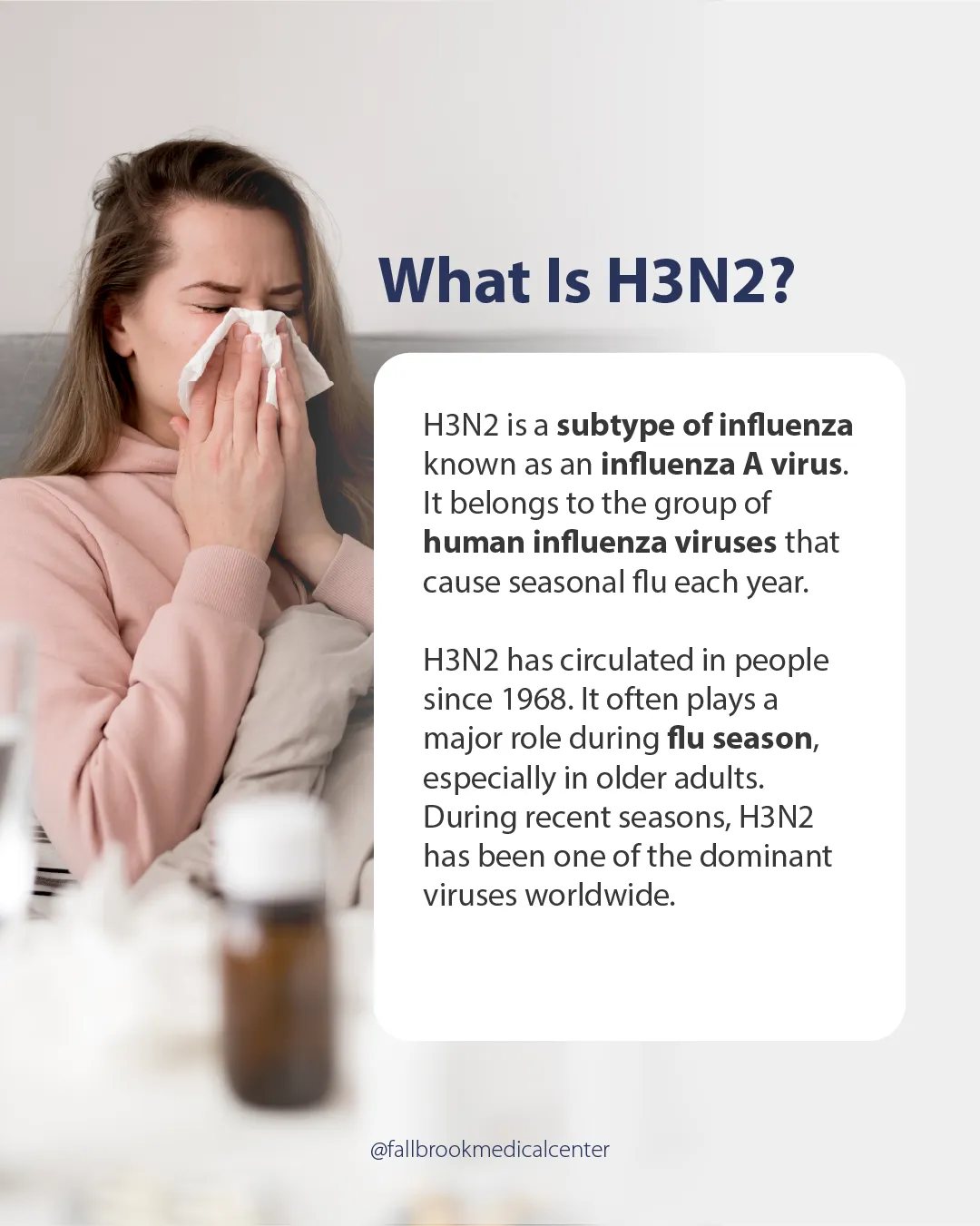
H3N2 is a subtype of influenza known as an influenza A virus. It belongs to the group of human influenza viruses that cause seasonal flu each year.
H3N2 has circulated in people since 1968. It often plays a major role during flu season, especially in older adults. During recent seasons, H3N2 has been one of the dominant viruses worldwide.
What Is Different About the New H3N2 Strain?
Researchers in Europe identified a newly emerged H3N2 subclade K strain in 2024–2025. It carries several small genetic changes in its surface proteins.
The world health organization and the European Centre for Disease Prevention and Control report rising circulation of this subclade. In some European countries, it accounts for a large share of positive flu samples.
The U.S. Centers for Disease Control and Prevention also detected this subtype of influenza. They describe it as “antigenically drifted” from the H3N2 virus used in the 2025–2026 flu vaccination.
This means the immune response from the vaccine may be somewhat lower against this strain. However, current data still show good protection against severe disease and hospitalization.
Current H3N2 Situation in Europe and the United States
In Europe, flu activity began earlier than usual this season. Subclade K now represents nearly half of the reported H3N2 sequences.
Some European countries report intense pressure on hospitals. Many of these hospitalizations involve older adults and people with weakened immune systems.
In the United States, influenza A virus remains predominant this year. Both H1N1 and H3N2 circulate at similar levels nationally.
CDC has confirmed the presence of the new strain of H3N2 but reports typical seasonal activity so far. Officials still expect a significant flu season, especially after the holidays.
Common Flu Symptoms to Watch For
Whether caused by H1N1 or the H3N2 virus, flu symptoms are usually similar.
Typical symptoms include:
- Sudden fever or feeling feverish
- Chills and body aches
- Sore throat and cough
- Headache and extreme fatigue
- Stuffy or runny nose
- Sometimes nausea or diarrhea, especially in children
If you are developing flu symptoms, stay home and rest. Monitor your breathing and fever closely.
Who Is Most at Risk From H3N2?
Most healthy adults recover within one to two weeks. However, some groups face higher risk from any virus infection, including H3N2.
Higher risk groups include:
- Adults over 65
- People with chronic lung or heart disease
- Those with weakened immune systems
- Pregnant people
- Young children
- People with obesity, diabetes, or kidney disease
If you belong to any of these groups, talk with your provider early in flu season.
How H3N2 Spreads
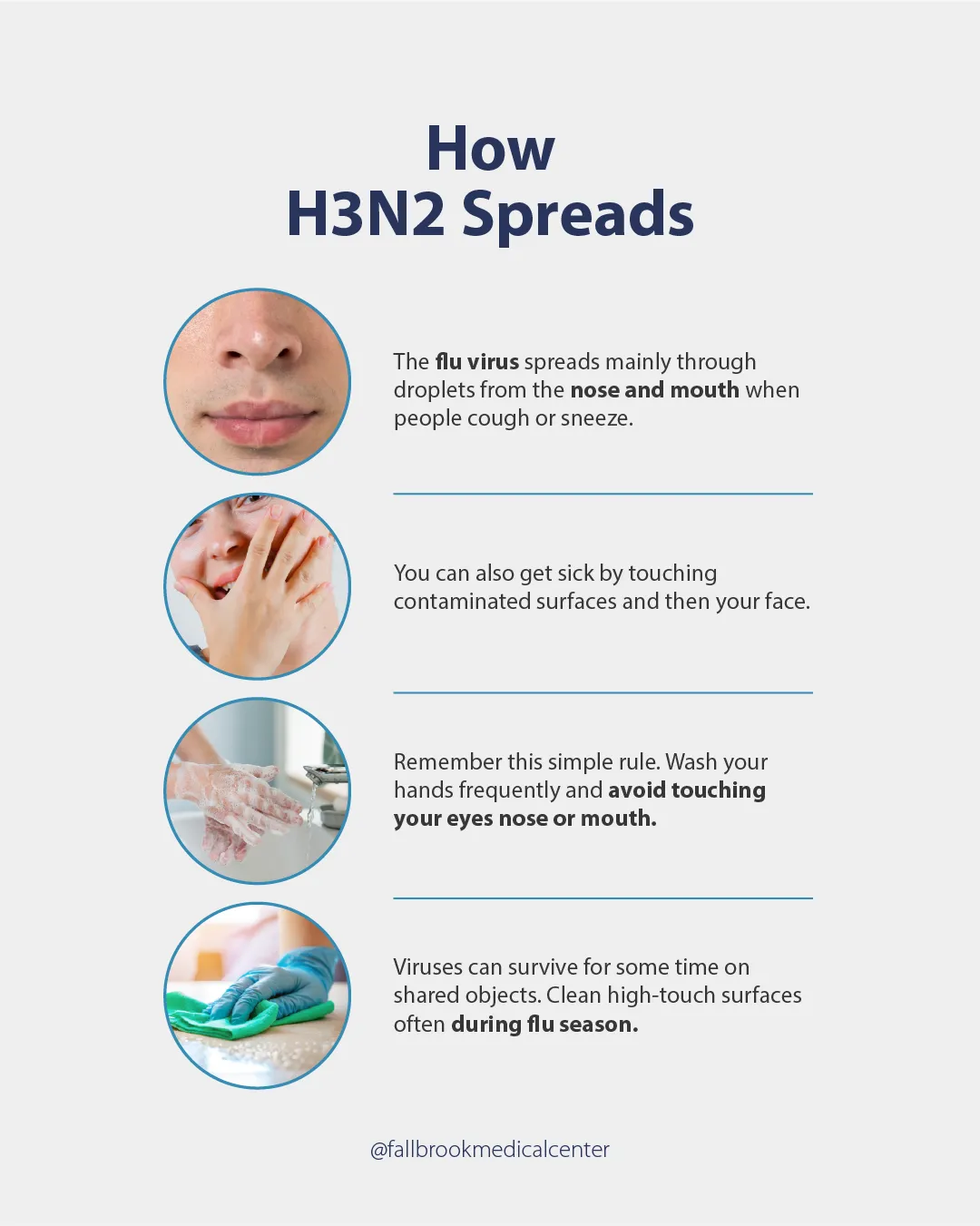
The flu virus spreads mainly through droplets from the nose and mouth when people cough or sneeze. You can also get sick by touching contaminated surfaces and then your face.
Remember this simple rule. Wash your hands frequently and avoid touching your eyes nose or mouth.
Viruses can survive for some time on shared objects. Clean high-touch surfaces often during flu season.
Protection: Flu Vaccination and Everyday Habits
Why Flu Vaccination Still Matters
Even with a drifting H3N2 virus, flu vaccination remains your best protection. Vaccinated people are less likely to need hospital care if they get sick.
Recent reports from Europe suggest good early effectiveness against severe disease, including subclade K. In the Americas, vaccination campaigns help reduce deaths and intensive care admissions.
For most people six months and older, one dose each annual flu season is recommended. Your provider can help you choose the right vaccine type for your age and conditions.
Everyday Steps to Lower Your Risk
These simple habits lower your chance of developing flu:
- Wash hands with soap for at least 20 seconds
- Use alcohol-based hand sanitizer when needed
- Cover coughs and sneezes with your elbow
- Improve ventilation in indoor spaces
- Stay home when sick and avoid crowded areas
If someone in your home has confirmed flu, your doctor may discuss antiviral medication.
When to See a Doctor in Fallbrook
Call your doctor or visit urgent care if you have:
- Trouble breathing or chest pain
- Lips or face turning bluish or gray
- High fever that does not improve
- Confusion, dizziness, or severe weakness
- Flu symptoms that improve, then suddenly worsen
People at high risk should contact a provider as soon as flu symptoms start. Early antivirals work best within the first two days of illness.
Patients in our community can contact Fallbrook Medical Center for guidance and same-week appointments.
FAQ About H3N2 in 2025
Is H3N2 the same as bird flu?
No. H3N2 in people is a human seasonal flu virus. Some animal H3N2 viruses affect birds or dogs, but these are different types of flu.
Does the current flu shot protect against H3N2 subclade K?
Yes, but protection is not perfect. This season’s vaccine includes an influenza A virus H3N2 component. Because the subclade has drifted, protection may be somewhat reduced, especially against mild illness. However, it still lowers the risk of severe outcomes and hospitalization.
How can I tell if I have H3N2 or COVID-19?
You cannot know for sure from symptoms alone. Both viruses can cause fever, cough, and fatigue. Your provider may order testing for accurate diagnosis and treatment decisions.
Conclusion: Stay Informed, Stay Protected
The new strain of H3N2 shows that flu continues to change each year. Europe is experiencing an early and intense wave, and the United States is watching closely.
You can protect yourself by combining flu vaccination, healthy habits, and early medical care when needed. If you have questions about the H3N2 flu virus or flu symptoms, our team at Fallbrook Medical Center is here to help.
References
- Centers for Disease Control and Prevention. (2024). 2024–2025 flu season.
- Centers for Disease Control and Prevention. (2025a). Influenza activity in the United States during the 2024–25 season.
- Centers for Disease Control and Prevention. (2025b). Weekly U.S. influenza surveillance report, week 48.
- Centers for Disease Control and Prevention. (2025c). 2025–2026 flu season recommendations.
- European Centre for Disease Prevention and Control. (2025). Assessing the risk of increasing circulation of A(H3N2) subclade K in the EU/EEA
- Kirsebom, F. C. M., et al. (2025). Early flu virus characterisation and vaccine effectiveness against A(H3N2) K in England
- Pan American Health Organization. (2025). Seasonal influenza in the Americas: Epidemiological alert, December 2025.
- World Health Organization. (2025). Global respiratory virus activity: Weekly update No. 556.
- The Independent. (2025, December). What we know about flu variant A/H3N2 K: The strain behind 90 per cent of cases.