


Wegovy constipation: causes, relief, and prevention

Constipation can feel frustrating while you are working on weight management. If you recently started Wegovy, you may notice slower digestion. You are not alone, and there are practical ways to feel better.
This guide explains why constipation happens with Wegovy. It also shares safe, step-by-step habits for relief. Use it as education, not personal medical advice.
At Fallbrook Medical Center, we support patients through safe, practical care that fits real life. We offer preventive care, health assessments, and regular medical appointments. These services help you stay on track with your health goals.
We also provide sports physical exams, DMV exams, injections, and care for acute and chronic condition management. We provide IV treatments and nutrition counseling for patients who need extra support. This way, your plan helps with both symptoms and long-term wellness.
If symptoms feel severe, contact a licensed clinician. Urgent symptoms need urgent care.
Why constipation can happen with Wegovy
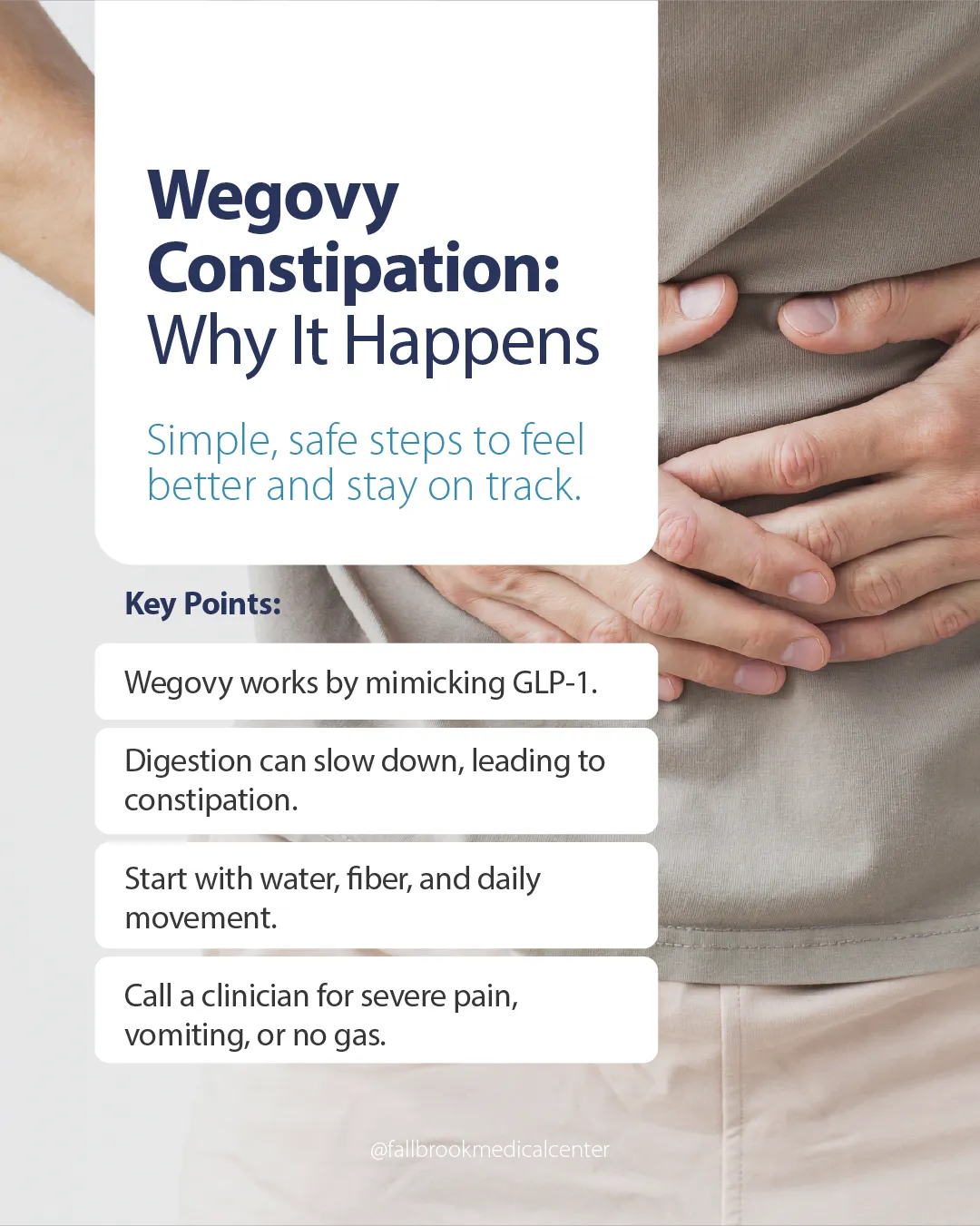
Wegovy is a glp-1 receptor agonist used for weight loss support. Wegovy works by mimicking a natural hormone called GLP-1. This hormone affects appetite, the stomach, and the digestive system.
GLP-1 medicines can slow stomach emptying. They can also slow gut movement in some people. That slowdown can be uncomfortable, leading to constipation.
Eating less can also play a role. Smaller meals can mean less stool bulk. Less bulk can reduce the urge for a regular bowel movement.
Is constipation one of the common side effects?
Yes. Constipation is listed among the common side effects of Wegovy. The FDA prescribing label also lists constipation among common reactions. Many people experience constipation early in treatment.
Symptoms often show up during dose increases. They can also show up after diet changes. For many people, it improves with routine habits.
Who is more likely to get constipated?
Constipation risk varies from person to person. These factors often raise the odds:
- Low daily fluid intake.
- Low fiber intake.
- Less movement during the day.
- A prior history of constipation.
- Other medicines that slow the gut.
Blood sugar can matter too. Wegovy may cause low blood sugar in people with type 2 diabetes. Your care team may adjust other diabetes medicines.
What constipation looks like on Wegovy
Constipation is more than “not going today.” It can include hard stools and straining. It can also include a feeling of incomplete emptying.
Watch for patterns in your bowel movement. Notice frequency, comfort, and stool texture. A simple journal can help your clinician.
When to seek urgent help
Some symptoms should not wait. Seek urgent care if you have any of these:
- Severe belly pain that worsens.
- Vomiting with inability to keep fluids down.
- No stool plus no gas for many hours.
- Blood in stool, or black stools.
- Fever with worsening belly pain.
Severe GI reactions can happen with Wegovy. Vomiting or diarrhea can cause dehydration. Dehydration can affect kidney function.
Step-by-step relief plan that is Wegovy-friendly
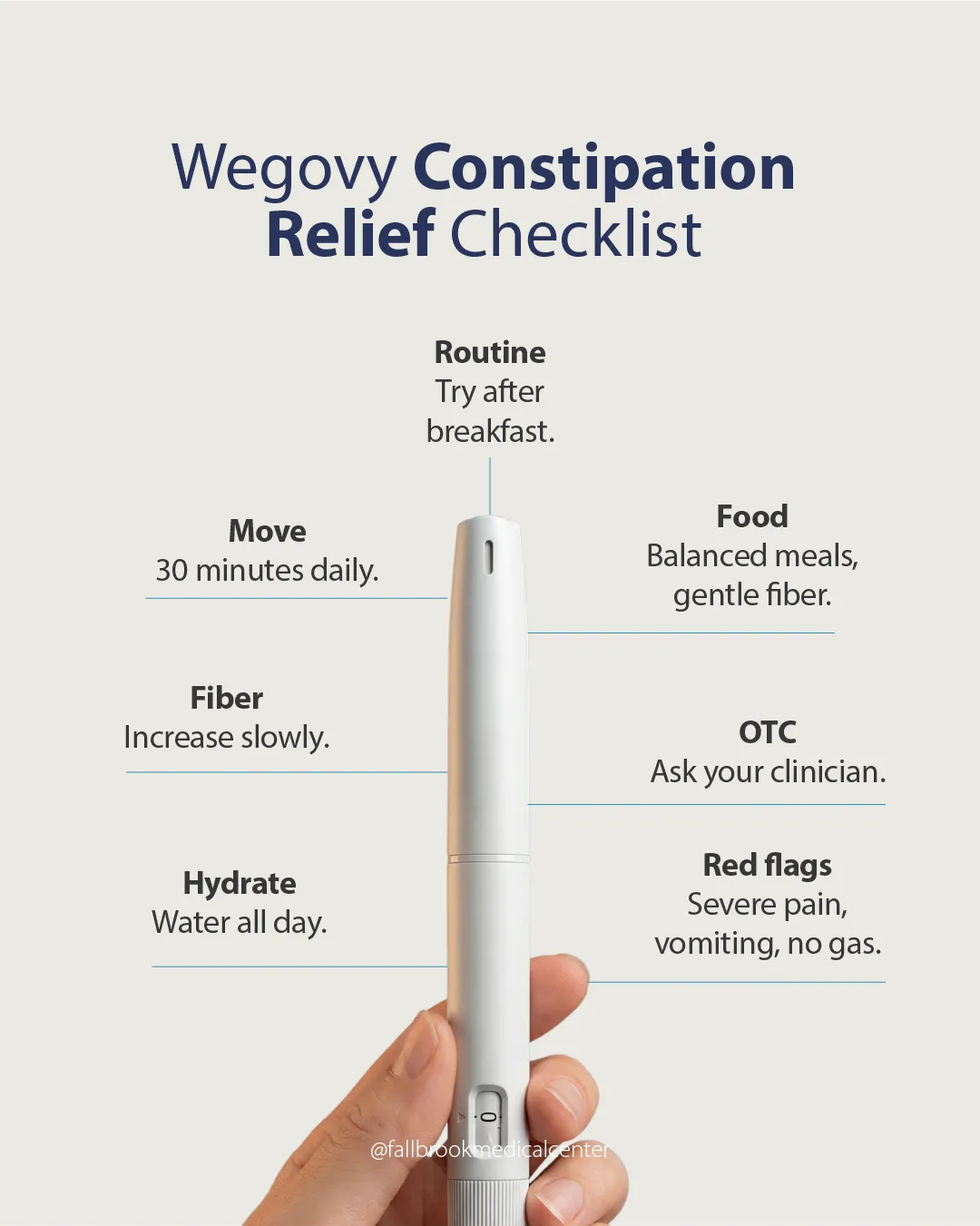
These steps are simple and often effective. Start with the first two steps for several days. Then add more steps as needed.
1) Stay hydrated, on purpose
Dehydration can harden stool. Aim to stay hydrated throughout the day. Water helps fiber work better in the gut.
Try this routine:
- Drink a glass of water after waking.
- Drink another glass with each meal.
- Sip water between meals, not only at night.
If you have kidney or heart limits, ask your clinician first. Fluid goals should match your medical history.
2) Add fiber slowly for softer stools
Fiber can support stool bulk and movement. Increase fiber slowly to reduce bloating. Slow increases are easier on the gut.
Focus on foods that help with softening stools. Try oats, chia, beans, berries, and vegetables. Prunes can help some people, too.
If you use fiber supplements, start small. Psyllium is a common option for some adults. Drink water with any fiber supplement.
3) Move daily to wake up the gut
Movement helps the intestines contract. Add physical activity most days of the week. Start with walking, even if you feel tired.
Try 30 minutes of brisk walking when possible. Split it into three 10-minute walks if needed. Consistency matters more than intensity.
4) Build a predictable bathroom routine
Your gut likes patterns. Pick one time each day to try. Many people choose after breakfast.
Use a footstool if it helps comfort. Avoid prolonged straining. Give yourself privacy and time.
5) Adjust meals to support the gut
Very small meals can reduce stool volume. Very heavy meals can worsen nausea. Aim for balanced meals with fiber and protein.
Include:
- A fiber source at each meal.
- A fruit or vegetable snack daily.
- Healthy fats in modest amounts.
If nausea is strong, choose gentle fiber sources. Cooked vegetables can feel easier than raw salads. Soups can support fluids and digestion.
6) Consider OTC options with clinician guidance
Lifestyle steps are first-line for many people. Sometimes, you need short-term medication help. Ask your clinician before starting new laxatives.
Evidence-based guidance supports polyethylene glycol (PEG) for constipation. Magnesium oxide and senna can also be options for some adults. Some stimulant laxatives are best used short term.
Avoid stacking multiple products at once. Use one change at a time. Stop and call your clinician if pain worsens.
7) If constipation persists, ask about next-step care
Persistent constipation deserves a plan. Your clinician may review diet, fluids, and movement. They may also review other medicines.
Guidelines include prescription options after OTC steps fail. Your best choice depends on your symptoms. It also depends on your health history.
Prevention during dose increases
Dose escalation is a common trigger. Gut symptoms can increase during those weeks. Prevention is easier than rescue.
Try these prevention habits:
- Add water before you feel thirsty.
- Add fiber slowly, not suddenly.
- Walk daily, even lightly.
- Keep a steady bathroom schedule.
If constipation starts, act early. Early steps reduce discomfort later. They can also reduce the risk of complications.
How Fallbrook Medical Center can help
Constipation can be manageable with the right plan. We can help you personalize that plan.
When you experience constipation while using Wegovy, it can be due to diet changes or dose increases. Our team is here to help you respond quickly and safely.
We can combine symptom tracking with a personalized health plan. This plan will match your overall care. It includes regular medical appointments, management of acute and chronic conditions, and preventive care.
If you need help with hydration, nutrition, or meal planning, we can assist you. We offer nutrition counseling and, if needed, extra clinical support like IV treatments or injections. We also provide easy services like health assessments, sports physicals, and DMV exams. This helps you keep your health needs organized in one place.
We focus on safe, sustainable weight management support. A visit can include:
- Medication review and symptom tracking.
- Nutrition coaching for gut-friendly meals.
- Activity planning that fits your lifestyle.
- Screening for other causes of constipation.
We also review potential side effects across your full plan. That includes nausea, reflux, and dehydration risk. Care works best when it is individualized.
Frequently asked questions
Does Wegovy cause constipation?
It can. Constipation is listed among common reactions. It often appears during dose escalation weeks.
How long does constipation last on Wegovy?
Many cases improve with routine habits. Some cases need medication support or dose review. Call your clinician if it lasts beyond two weeks.
What can I do today for faster relief?
Start with fluids and gentle movement. Add fiber slowly, not all at once. Try a bathroom routine after breakfast.
Are laxatives safe with Wegovy semaglutide?
Some OTC options can be appropriate for adults. Your best option depends on your health history. Check with your clinician before starting them.
When should I worry about a blockage?
Severe pain, vomiting, and no gas are red flags. Seek urgent care if these occur. Do not wait for a routine appointment.
Can constipation affect my progress?
It can affect comfort and consistency. It does not mean the medicine “stopped working.” Comfort helps you stay consistent with your plan.
Conclusion
Wegovy can support weight loss and long-term health goals. But GI symptoms can happen during the process. Constipation is common, and it is often manageable.
Start with hydration, fiber, and daily movement. Build a consistent routine for your bowel movement. Ask for help if symptoms persist or worsen.
If you want a personalized plan, our team can help. We can tailor steps to your goals and medical history. Support makes progress feel safer and more sustainable.
Sources
- American College of Gastroenterology. (2023). ACG and AGA guideline on chronic constipation management.
- National Institute of Diabetes and Digestive and Kidney Diseases. (2025). Treatment for constipation. Instituto Nacional de Diabetes y Enfermedades Digestivas y Renales
- National Institute of Diabetes and Digestive and Kidney Diseases. (2025). Eating, diet, & nutrition for constipation. Instituto Nacional de Diabetes y Enfermedades Digestivas y Renales
- Novo Nordisk. (n.d.). Common side effects of Wegovy (semaglutide). Wegovy
- U.S. Food and Drug Administration. (2025). WEGOVY (semaglutide) prescribing information (Label 215256s024). FDA Access Data
- Shankar, A., et al. (2024). GLP-1 receptor agonists and delayed gastric emptying. National Library of Medicine, PMC.